Preparing for labour
Choosing where to give birth
Choosing where to give birth
Women give birth in different places such as at home, in a unit run by midwives either alone or nearby one run by doctors, or in a consultant-led unit. In all settings there will be midwives, student midwives and other healthcare students including student doctors. Most care during labour is given by midwifes in all settings, however, there are certain procedures which are only available in a doctor-led setting, for example, epidural, instrumental vaginal birth, caesarean birth, management of infection and other urgent surgical interventions.
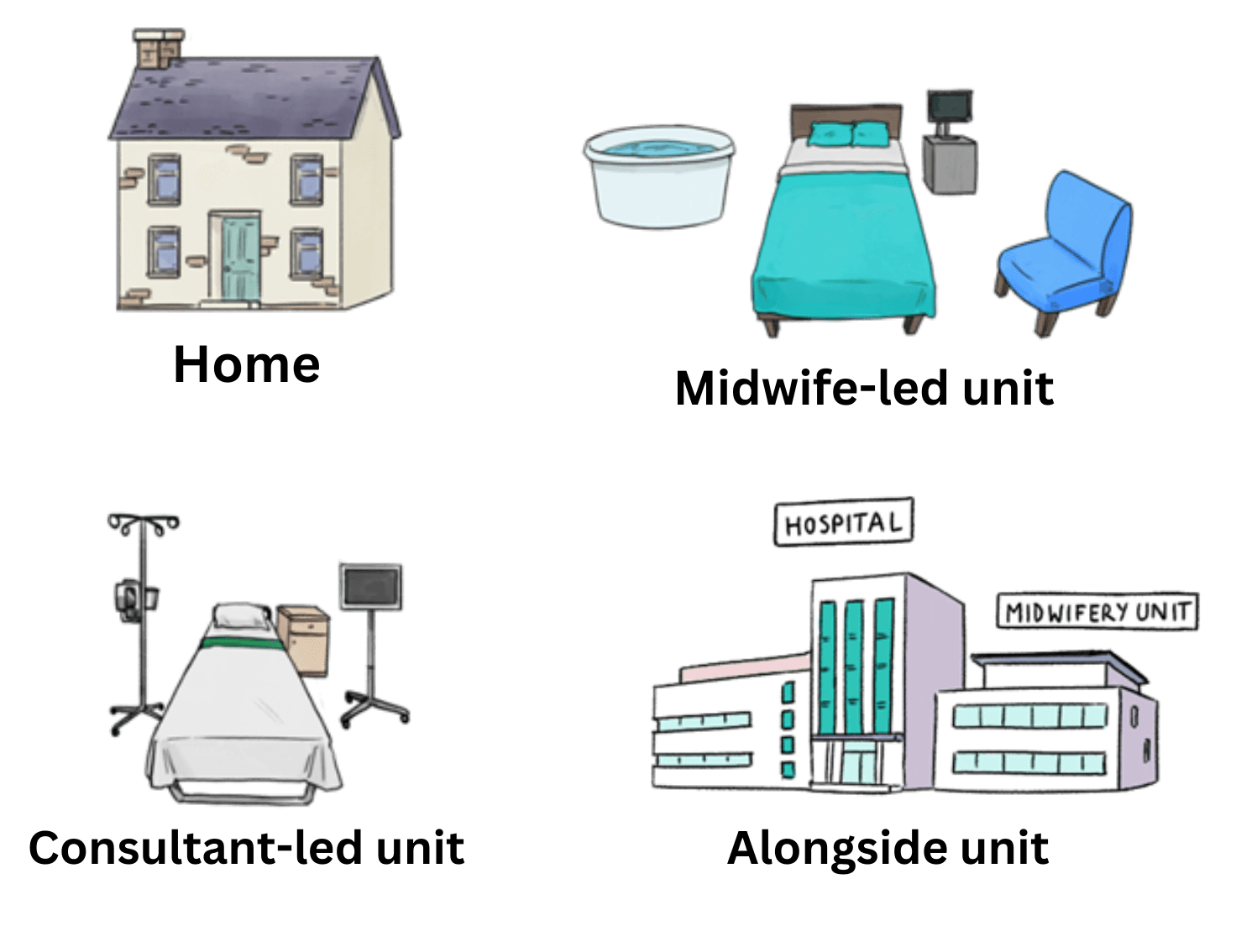
Your midwife or doctor may recommend having your baby in a specific setting. For example, if you are at an increased risk of or have previously experienced labour complications, they may recommend having your baby in a midwifery unit in a hospital with a consultant-led unit, or in a consultant-led delivery suite. In these consultant-led settings, there will be paediatric doctors (doctors that look after babies and children) and anaesthetic doctors available in these areas as well if you need any help from them.
Different locations have different risks and benefits for you and your baby.
If this is your first or if you have already had a baby, giving birth at home or in a freestanding midwifery unit might mean intervention is less likely and vaginal birth is more likely. Interventions include episiotomy, caesarean section and assisted vaginal birth. If you are giving birth at home, there is a small increase in the number of babies who will have a serious medical problem, in all other locations the outcomes for babies are the same.
If you have had a baby before, giving birth at home or in a freestanding midwifery unit might mean intervention is less likely and vaginal birth is more likely. Interventions include episiotomy, caesarean section and assisted vaginal birth. The outcome for your baby at home or in a freestanding midwifery unit is no different than their outcome if you gave birth in a consultant-led unit.
An important consideration if you decide to give birth at home, or in a midwifery led unit is the rate of transfer into a consultant-led setting. Transfers can be at your request (e.g. for an epidural for pain relief) or because of an emergency (e.g. concerns with baby’s heart rate, bleeding after birth), or because of a change of situation in labour (e.g. baby has done a poo inside your womb and causing them distress, a doctor is required to fix your vaginal tear).
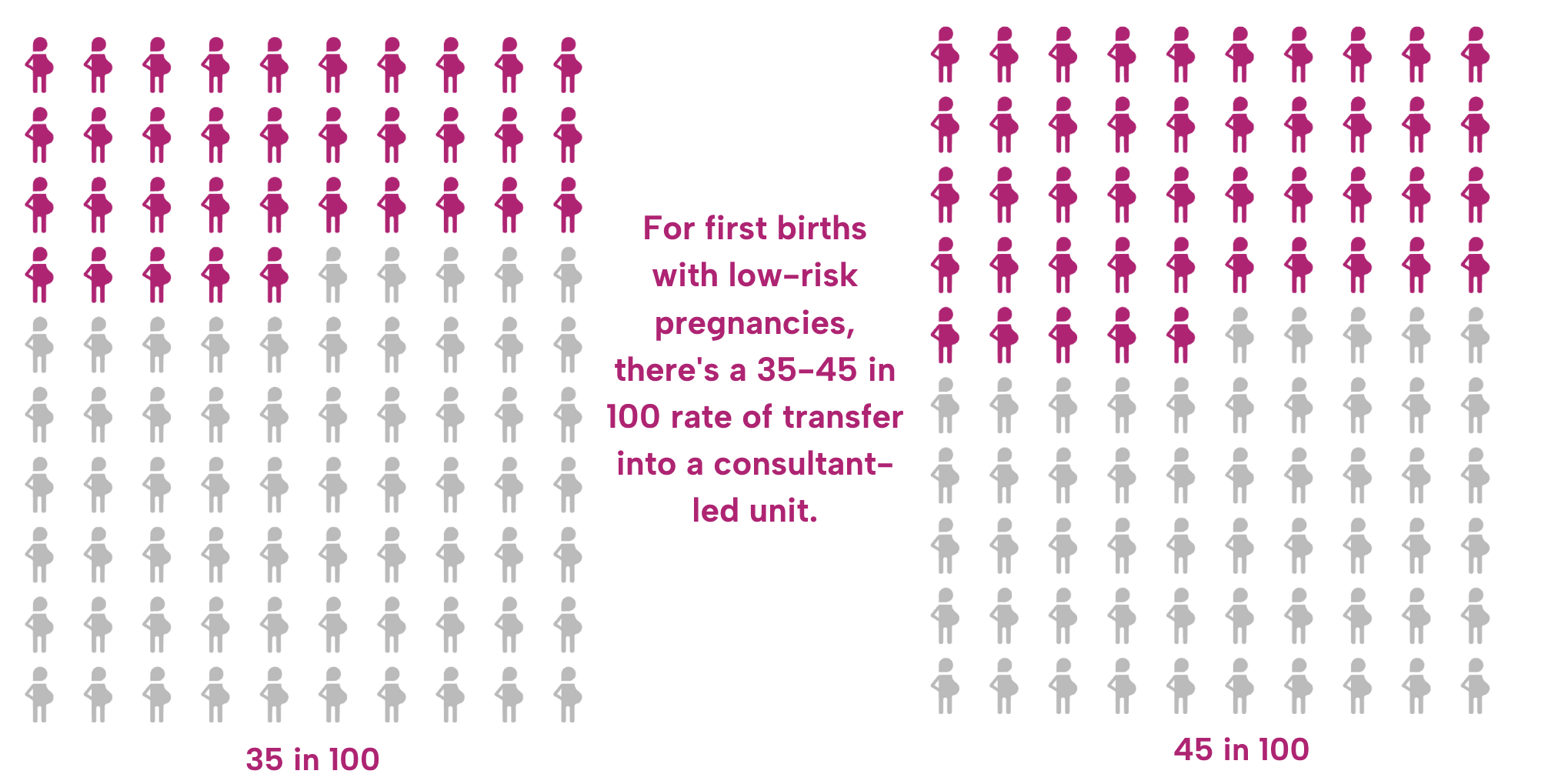
If this is your first birth and your pregnancy is considered low risk, there is an 35-45 in 100 rate of transfer into an consultant-led unit.
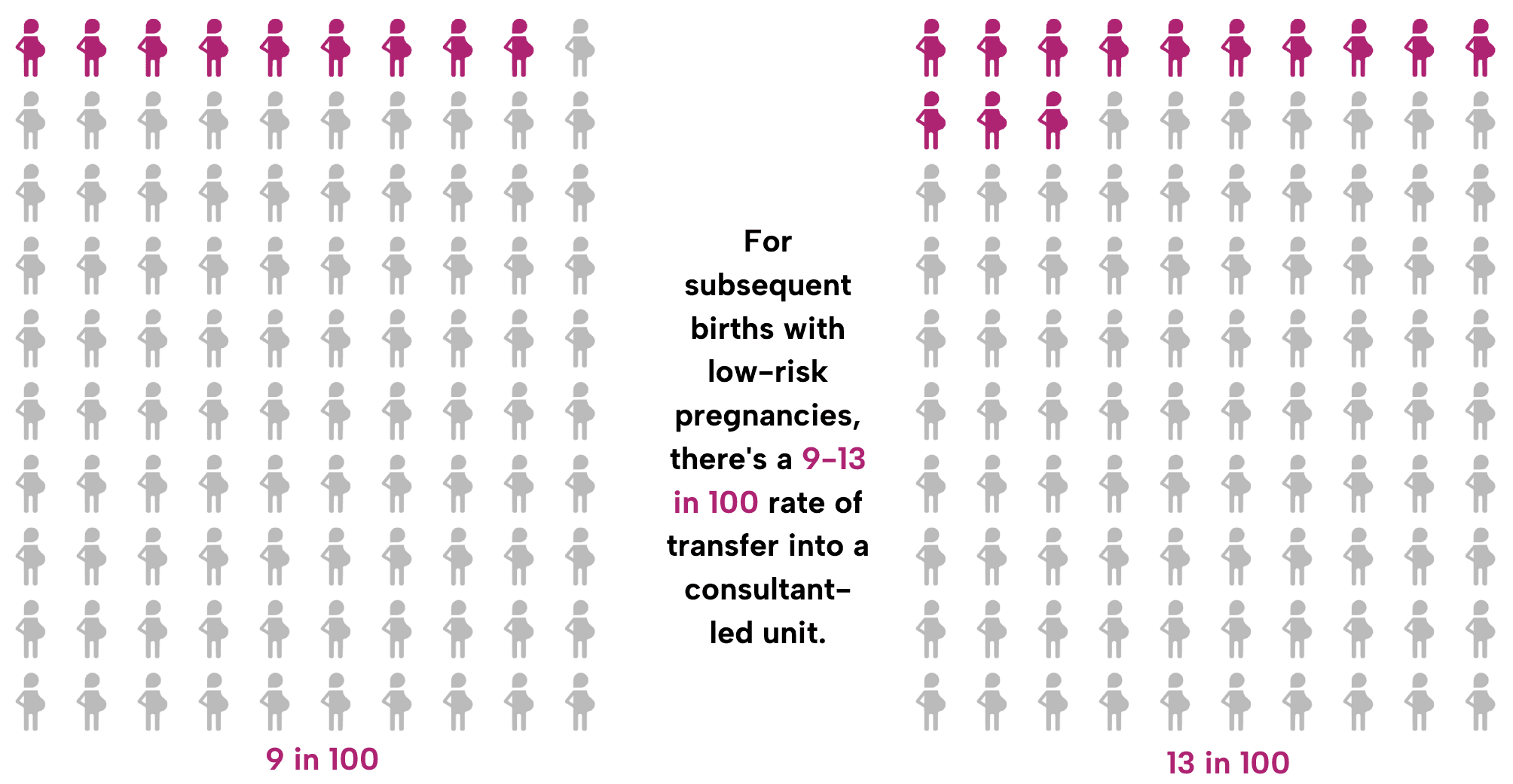
If this is a subsequent birth and your pregnancy is considered low risk there is an 9-13 in 100 rate of transfer into an doctor-led unit. It is useful for you to consider this, and the length of time it takes for a transfer in from each of the various birth settings.
The time it takes to transfer from each birth setting will also vary.
References:
Intrapartum care. NICE guidelines Published September 29, 2023. Accessed October 18, 2023. https://www.nice.org.uk/guidance/ng235/chapter/Recommendations#planning-place-of-birth
Hollowell J, Rowe R, Townend J, et al. The Birthplace in England national prospective cohort study: further analyses to enhance policy and service delivery decision-making for planned place of birth. Health Serv Deliv Res. 2015;3(36).